
About Us
The Trust for Anthroposophy in Australia was initiated in 1991 and was formally incorporated as the Trust for Anthroposophy in Australia Limited (acn 075 333 274) with the following mission:
The cultivation and furtherance of the awareness and understanding of the knowledge contained in Anthroposophy to the wider community, and the dissemination of this knowledge and the values contained therein, for the practical solutions to the vast array of problems which confront modern humanity today.
Biographies
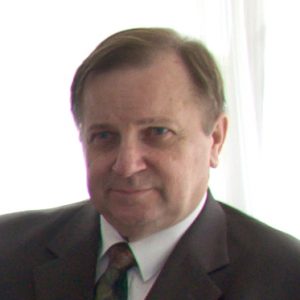
MIlan Telford - Administrator
Milan Telford became interested in Spiritual Science and Anthroposophy, founded by Dr Rudolf Steiner (1861 -1925) at around the age of 21. In the 1980s to mid 1990’s Milan was (hon.) Treasurer of the Anthroposophical Society in Australia. During this time he met with and became a long time friend of Dr Karl Kaltenbach OAM and they worked together both within the Society and privately on a number of initiatives over the course of the decades. The ‘Trust for Anthroposophy in Australia’ company began in 1996 and became the physical entity for a number of initiatives that were supported and promoted by the Trust, including the MichaEL Schooling initiative by Karl Kaltenbach. The Trust at its inception was also supported by Manfred Schmidt Brabant (late), and Dr Viginia Sease. The purpose of the Trust is outlined on the Home Page. Milan is a Fellow Certified Practicing Accountant and a qualified lawyer and associate member of the NSW Law Society. He works at the only Anthroposophical Retirement Village in Australasia – Christophorus House Retirement Village, where he has been the CEO for the past 13 years.
Dr (h.c.) Karl Kaltenbach OAM
Karl Kaltenbach was born in Germany, educated at the Rudolf Steiner School in Basel, Switzerland. He studied agriculture and business was a freelance artist and had exhibitions in London and Basel before he immigrated to Australia in 1962. He and his wife Hannelore founded in 1969 an organization and community called Warrah in Sydney for children and adults with intellectual disabilities using the Steiner methodology. Of this organization he was Executive Director for 27 years. In 1982 he was awarded the Order of Australia Medal [OAM] for services to the disability field by the Australian Government and in 1992 was conferred a honoris causa Doctorate, for his writings on education for people with disabilities.
Karl Kaltenbach was General Secretary of the Anthroposophical Society in Australia from 1982 to 2003. He was instrumental – together with the previous General Secretary, Robert Williams and others – in uniting the various groups in the States through a national constitution. He also was chair of the Faculty of the School of Spiritual Science, which is an integral part of the above Society. In this School he gave courses on the spirit of holding free esoteric interpretations on Rudolf Steiner’s spiritual paths as described in the 19 lessons which have been published in 1985.
Karl lectured on spiritual philosophy, research, meditation and education, both in Australia, Europe, Africa and Asia. He belonged to the Groups who in Asia developed the anthroposophical initiative group. He paints and draws in two styles: one is rather expressionistic; in which he visualizes how his soul responds to nature experiences. They are without premeditated intentions. The second form of expression is when he deliberately brings onto the paper, individualized spiritual ideas in the form of drawings. These are often illustrations based on Rudolf Steiner’s black board drawings and used in esoteric lessons of the School of Spiritual Science.
Since 1996 he worked as a consultant in organizational management in a number of Rudolf Steiner Schools and had a constructive influence on helping to overcome the in-house conflicts. From 2001 to 2004 he held the position of College Chair at Tarremah Steiner School in Tasmania.
From 2009 he engaged himself in the forming the Art Section as part of the School of Spiritual Science. His focus was the acknowledgement of how postmodern art was far behind the contemporary art impulse. He created conceptual bridges between Rudolf Steiner’s classical modern art to the contemporary art as expressed in this essay.
|
Appointments:
|


